



Pvc Suspension Resin Manufacturers supply the base material used to make rigid pipes, profiles, fittings, cables, films, and other products. Choosing the right resin affects melt strength, impact performance, surface finish, processing temperature, and production stability. Buyers looking for PVC suspension resin manufacturers for pipe and profile applications should compare K-value, particle size, porosity, bulk density, impurity level, packaging, and test data—not only price. This guide explains how PVC suspension resin works, where it is used, and how to select a reliable PVC resin partner for continuous production.

PVC suspension resin is a white, free-flowing powder made by polymerizing vinyl chloride monomer in water. The monomer droplets are suspended in the water phase, and initiators start the polymerization reaction inside these droplets. After polymerization, the PVC particles are separated, washed, dried, screened, and packed.
The term “suspension” describes the production method. It does not mean that the final PVC product must be liquid or flexible. In fact, suspension PVC is widely used for rigid products such as pressure pipes, drainage pipes, window profiles, siding, electrical conduit, and fittings.
| Technical term | What it means | Why it matters to buyers |
|---|---|---|
| K-value | An indicator related to PVC molecular weight and solution viscosity | It influences melt strength, processing behavior, and final mechanical performance |
| Particle size distribution | The range and average size of resin particles | It affects feeding, dry blending, dispersion, and powder handling |
| Bulk density | The mass of powder in a given volume | It affects storage capacity, silo loading, and feeding consistency |
| Porosity | The internal void structure of PVC particles | It affects plasticizer absorption and fusion behavior |
| Volatile content | Moisture and other substances released during heating | High levels may cause bubbles, surface defects, or unstable processing |
| Fish eyes | Unfused or poorly fused resin particles visible in the processed product | A high count can reduce surface quality and product reliability |
ASTM D1755, Standard Specification for Poly(Vinyl Chloride) Resins, is a useful reference for resin classification and quality discussions. Buyers should still agree with the manufacturer on the exact grade, test method, acceptance range, and application before placing an order.
In rigid PVC pipe and profile production, resin is normally mixed with stabilizers, impact modifiers, processing aids, lubricants, pigments, and fillers. The dry blend is then heated and shaped by an extruder. The resin grade must fuse at a suitable rate without creating excessive melt fracture, poor surface quality, or dimensional instability.
PVC suspension resin is used in water supply pipes, sewer pipes, drainage systems, irrigation lines, and conduit systems. The correct resin helps the compound achieve a balance of stiffness, impact resistance, long-term pressure performance, and smooth extrusion.
For pipe production, buyers should review:
For example, pipe producers may need to work with standards such as ISO 1452 for pressure piping systems made from unplasticized PVC, or regional standards such as ASTM D1785 and ASTM D2241. The resin alone does not make a pipe compliant. The complete formulation, extrusion process, dimensions, testing, and production controls determine the final result.
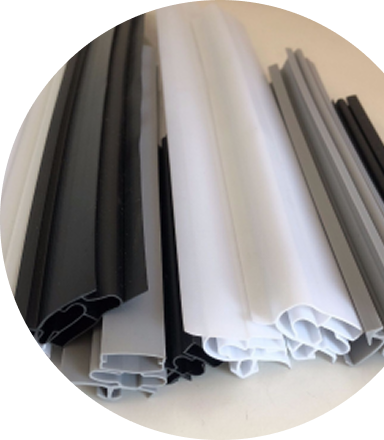
PVC profiles are used for window frames, door frames, decorative trim, wall panels, and construction components. These products require stable color, good weathering performance, dimensional control, and a clean surface.
Profile manufacturers often focus on:
Rigid PVC resin is also used in electrical conduit, cable ducts, and protective profiles. These products need electrical insulation, stiffness, flame performance, and reliable extrusion. The final requirements depend on the applicable electrical or construction standard and the formulation used by the converter.
PVC suspension resin can be compounded for fittings, valves, connectors, and other molded products. Injection molding requires attention to melt flow, thermal stability, mold filling, weld lines, and cooling shrinkage. A resin grade designed for extrusion may not provide the best result in injection molding, so the processing method should be confirmed before selection.
Resin quality affects the entire production chain. A small change in particle structure or K-value can change the way the powder absorbs additives and fuses inside the extruder. This may lead to higher scrap, more die cleaning, unstable dimensions, or a different surface appearance.
Important quality indicators include:
| Indicator | Possible production effect | Recommended buyer action |
|---|---|---|
| K-value | Changes melt strength and processing response | Match the grade to the product and equipment, then confirm with a trial |
| Bulk density | Changes hopper filling and conveying behavior | Request the test method and typical range |
| Particle size | Influences powder flow and additive distribution | Ask for sieve analysis or particle-size data |
| Volatile content | May contribute to bubbles and surface defects | Set a maximum value in the purchase specification |
| Fish-eye count | Can create visible spots or weak areas | Define the test method and acceptance limit |
| Whiteness or color | Changes the appearance of white or light-colored products | Compare samples under the same lighting conditions |
Safety and environmental controls also matter. The European Chemicals Agency identifies vinyl chloride as a substance subject to strict control because of its hazardous properties. Modern PVC resin production therefore requires controlled monomer handling, closed processing systems, emissions management, and worker protection. Buyers should request relevant safety documentation, including the Safety Data Sheet and regulatory information for the destination market.
Finding a low-price supplier is only one part of procurement. The better goal is to find a manufacturer whose resin remains consistent across lots and matches your production equipment.
Send the manufacturer clear application information. A useful inquiry should include:
A vague request for “PVC resin” often produces an unsuitable quotation. A detailed application brief helps the supplier recommend a grade based on actual processing conditions.
Do not compare only the headline K-value. Review the complete technical data sheet and ask whether each value is a typical result or a guaranteed limit. Check the following points:
A laboratory sample cannot replace a plant trial. Use the same formulation and processing settings that are used for regular production. Record:
Comparing these records with your current resin gives a more useful result than judging powder appearance alone. If the trial produces a 2% lower scrap rate, the financial value may be greater than a small difference in purchase price. Calculate the result using your actual material cost, labor cost, energy cost, and production output.
Before approving a supplier, ask for evidence of process control. Useful documents may include:
It is also reasonable to ask how the supplier controls reactor conditions, drying, screening, contamination, and storage. A certificate is useful, but consistent batch data and a clear corrective-action process provide stronger evidence of reliability.
Resin is often purchased in regular lots, so logistics can affect production as much as technical quality. Confirm the following before signing a contract:
Store PVC resin in a dry, covered area and protect bags from rain, condensation, and direct heat. Follow the supplier’s Safety Data Sheet and local workplace rules. Good storage reduces the risk of contamination and handling problems before the material reaches the mixer.
Possible causes include poor fusion, incorrect lubricant balance, contamination, unstable temperature, or a resin grade that does not match the formulation. Check the resin lot, dry-blend quality, die temperature, screw condition, and fusion behavior before changing several variables at once.
Fish eyes may result from poorly fused particles, resin contamination, inadequate mixing, or excessive material residence time. Ask the manufacturer for fish-eye test data and compare the same test method across suppliers. Also inspect screens, mixers, conveying lines, and storage bags.
Dimensional variation can come from melt temperature, cooling-water conditions, haul-off speed, die centering, pressure changes, or inconsistent bulk density. Resin consistency is important, but the complete extrusion line must be checked. Record resin lot numbers together with pipe dimensions to identify patterns.
Fusion depends on resin particle structure, K-value, porosity, stabilizer type, lubricant balance, mixing conditions, and shear. Use a torque rheometer or another agreed test method to compare candidate grades. Do not replace the resin without checking whether the additive package was designed for that grade.
Different laboratories may use different sample preparation, test temperatures, instruments, or calculation methods. Ask for the test standard and conditioning procedure for every important value. A numerical result without a method is difficult to use in supplier qualification.
A suitable supplier can support more than material delivery. The main business advantages include:
These benefits should be measured with production data. Track output per hour, scrap percentage, die-cleaning frequency, energy use per kilogram, product test results, and customer complaints. This converts a general supplier claim into a real cost comparison.
Yes. Suspension PVC resin is commonly used in rigid pipes, fittings, conduit, and profiles. The correct grade depends on the pipe standard, K-value, formulation, extrusion equipment, and required mechanical performance.
There is no single K-value for every pipe. The choice depends on the product design, pressure class, processing method, equipment, and additive package. A supplier should recommend a grade based on your formulation, followed by a laboratory and plant trial.
It may be possible, but it should not be assumed. Pipes and profiles can require different balances of fusion, impact resistance, weathering performance, melt strength, and surface finish. Test the same formulation and equipment conditions before approving one grade for both products.
Request a technical data sheet, Certificate of Analysis, Safety Data Sheet, packaging details, lot traceability information, and relevant compliance documents. Also ask for the test method behind each important specification.
Keep it sealed in a dry, clean, covered warehouse. Avoid rain, condensation, direct sunlight, and contact with contaminated surfaces. Follow the storage period and safety instructions stated in the manufacturer’s documentation.
Use the same product specification, formulation, processing settings, test methods, sample quantity, and delivery terms. Compare total cost per accepted kilogram, not only the quoted price per bag. Include scrap, trial time, transport, storage, and supply risk in the calculation.
Start with your product standard and production data. Prepare a short technical brief, request matching grades from several PVC suspension resin manufacturers, and compare their test methods before reviewing prices. Then run a controlled sample trial and record torque, fusion, output, dimensions, surface quality, and finished-product test results.
For additional technical guidance, contact Dingnuo with your product type, processing method, target standard, monthly demand, and current resin data. A clear application brief helps Dingnuo recommend a more suitable grade and support a practical trial. If you are researching how to choose PVC suspension resin manufacturers, use the checklist in this article and confirm every important claim with a data sheet, sample test, and batch record. For a reliable PVC suspension resin supplier for rigid PVC, the next step is to request a technical quotation and production sample from Dingnuo.
Finding the Right Solution for Your Industry
Contact us today to learn more about our solutions that are designed to drive your success
Other Product Recommendation